
Building Local Capability in Remote Healthcare: A Long Road Worth Taking
In remote operational environments such as mining sites, oil and gas installations, isolated infrastructure projects, access to quality medical care is not optional. It is a duty of care. For several decades, the default solution has been to bring in expatriate medical professionals.
This solution works. Skilled doctors, nurses, and paramedics from established healthcare systems can deliver excellent care in the most challenging settings. Hoewer, there is a question we do not always ask: what legacy are we building?
The Dependency Problem
Expatriate-led medical services create a paradox. They solve an immediate need while perpetuating a long-term vulnerability. Every rotation, every contract renewal, every visa complication introduces risk. Knowledge walks out the door. Relationships with patients and local teams reset. The institutional memory of a clinic (what works here, what does not, who needs closer monitoring) can evaporate and need to be rebuilt.
More fundamentally, a model built entirely on external professionals sends an unspoken message: local capability is not enough. That message is often not true, and it is never helpful.
This is not an argument against expatriate professionals. They remain essential and will continue to be for the foreseeable future. The clinical expertise, international experience, and fresh perspectives they bring are invaluable. But relying exclusively on external talent is not a sustainable strategy. It is a dependency.
A Different Approach
The alternative is not to replace expatriates overnight. It is to invest deliberately in local capability, to create structured pathways that allow national doctors, nurses, and healthcare workers to take on progressively greater clinical responsibility.
This sounds simpler than it is.
Genuine capability development requires more than occasional training sessions or e-learning modules ticked off a compliance list. It demands a sustained commitment: comprehensive curricula covering clinical skills, practical scenarios, and professional competencies. Face-to-face training with experienced clinicians. On-the-job mentoring where skills are practised, not just learned. And crucially, a willingness to trust local professionals with real responsibility, supervised at first, then increasingly autonomous.
At Medilink International, we have been building these programmes across our operations for over two decades. The results are encouraging. Some of our locations are now entirely staffed by national personnel. In one of our newer locations, trainee participation has grown by 267% since we launched our structured development programme. Face-to-face clinical training delivery increased by over 50% this year compared to last. We have a clear pathway for transitioning specific expatriate positions to national doctors over the coming years.
But… it would be misleading if we presented this as a solved problem.
The Honest Reality
Capability development in remote healthcare is difficult. Many factors lie beyond our control.
Regulatory environments vary enormously. In some countries, professional recognition and scope of practice for local clinicians is well-defined. In others, ambiguity creates barriers that training alone cannot always overcome. Staff retention is another challenge. We invest in developing people who are then recruited by other organisations, or who seek opportunities in less demanding environments. This is not failure; it is the nature of a competitive labour market. But it means progress is rarely linear.
Client expectations add complexity. Some organisations understand that nationalisation is a long-term investment and are willing to accept a transitional period where expatriate oversight remains necessary. Others want immediate solutions and fully qualified local teams on day one. Both positions are understandable. Neither changes the reality that building clinical capability takes time.
Additionally, there are the human factors. Not every trainee will succeed. Some will struggle with the intensity of emergency medicine in remote settings. Others will face personal circumstances that interrupt their development. A training programme is not a guarantee; it is an opportunity.
Why It Matters Anyway
Given these challenges, why do we persist?
The answer? The alternative (permanent dependency on external professionals) is not a strategy. It is an admission that we have given up on something important.
Every national doctor who completes an advanced training pathway and takes on a role previously held by an expatriate represents something significant. Not just cost efficiency, though that matters to our clients. Not just operational resilience, though that matters too. It represents a transfer of capability that outlasts any contract.
When a local nurse confidently manages an emergency that once would have required expatriate intervention, something has changed permanently. When a national doctor mentors the next cohort of trainees, a cycle begins that can sustain itself. When local teams lead, rather than assist, the dependency model starts to reverse.
This is slow work. It can be frustrating. The obstacles are real and recurring.
Our experience lies in clinical education and healthcare leadership, in acute hospital units, in specialist nursing, in care home management, and now in remote operational medicine. If there is one thing we have learned, it is that sustainable improvement comes from building people, not just systems.
The Measure of Success
There is a phrase we return to often: the measure of our success is not whether we are still needed. It is whether local teams are ready to lead.
The current reality of working in challenging environments, where healthcare infrastructure is limited and qualified local professionals are scarce, is that the road is long. The destination is worth it.
At Medilink International, we aew already further along than we were a few years ago.
More national staff are trained to higher levels.
More positions are on transition pathways.
More local clinicians are gaining the experience and confidence to take on advanced roles.
And that is a legacy worth building, one role at a time…
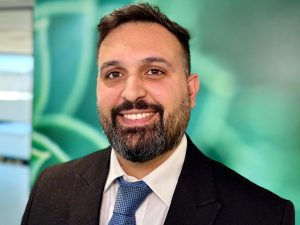
Anthony Brincat is Head of Clinical Support Services, Quality and Training at Medilink International. He has over 12 years of experience in clinical education, healthcare quality, and nursing leadership across Malta, Ireland, the UAE, and remote operational environments.

