
The Standard Does Not Change: Evidence-Based Medicine Across Every Context
Every clinical decision carries a responsibility. Not just to the patient in the room, but to the body of knowledge that medicine has built over decades to make that decision as good as it can possibly be.
That is what evidence-based medicine means. And that is the standard Medilink International holds itself to, everywhere it operates.
It is worth being precise about what that means in practice. Evidence-based medicine is the integration of the best available clinical research with the expertise of the practitioner and the specific needs of the patient.
A clinical decision is not made out of habit, convenience, or assumption. It is made because the evidence supports it, the practitioner understands it, and the patient’s situation calls for it.
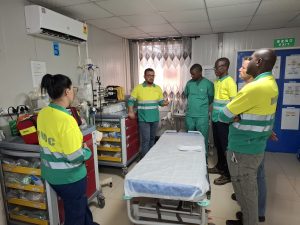
The harder part: consistency under pressure
It is relatively easy to practise evidence-based medicine in a well-equipped hospital with full access to diagnostic tools, specialist colleagues, and a stable supply chain. The question that matters for an organisation like Medilink International is whether that same standard holds when the conditions are less favourable.
When a medical team is deployed to a remote location, hundreds of miles from the nearest referral centre. When resources are constrained and decisions need to be made quickly. When the patient in front of you is far from home and the margin for error is narrow.
“The environment we work in can be challenging,” says Dr. Ahmed Dirar Bey, who works with Medilink International’s medical team in Guinea. “But the clinical standards we apply are exactly the same as those applied anywhere else in the world. That consistency is not optional. It is the whole point”.
These are the conditions in which Medilink International operates, regularly. And they are precisely the conditions in which the discipline of evidence-based medicine is most important, and most tested.
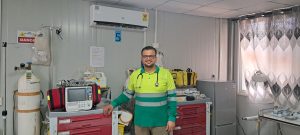
What it looks like in practice
Across three continents, Medilink International treats more than 50,000 patients annually. Each of those patients, regardless of where they are or who their employer is, receives care guided by the same clinical protocols, the same standards of practice, and the same commitment to decisions grounded in evidence rather than improvisation.
That consistency does not happen by default. It is the result of continuous investment in clinical governance, in training, in the development and updating of protocols that reflect the best available evidence, and in the selection of medical professionals who understand that the standard does not change because the setting does.
“Evidence-based medicine is not a principle we apply when it is convenient,” says Maria Melillo, CEO of Medilink International. “It is the foundation of every clinical decision we make, across every country and every context where we operate. Our patients deserve nothing less, and we hold ourselves to that standard without exception.”
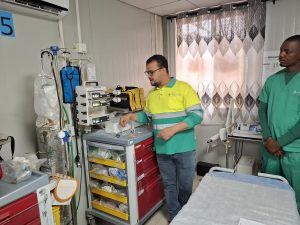
A daily choice
This World Health Day, the World Health Organisation is calling on all of us to stay with science. At Medilink International, that call is one we recognise because it describes something we practise every day, in every location, with every patient.
Staying with science is not a slogan. It is a daily operational decision, made by every clinician in every Medilink location, every time they see a patient. And it is the reason that all the patients we treat can trust that the care they receive is the same, wherever in the world they happen to be.

