
Malaria Is Not a Statistic: Why Getting the Treatment Right Matters for All of Us
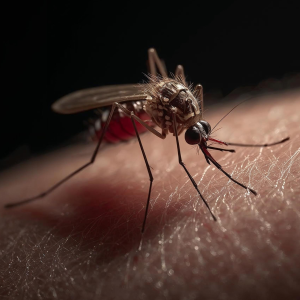
In parts of sub-Saharan Africa, malaria is not a disease that makes the news. It is part of the clinical landscape. It is the case that comes in late at night, the worker who deteriorated faster than expected, the decision that has to be made quickly and correctly, far from the nearest hospital. For the medical teams at Medilink International operating across the continent, this is not a theoretical scenario. It is the reality they navigate, regularly.
This year, the World Health Organisation’s theme is clear: “Driven to End Malaria: Now We Can. Now We Must.” At Medilink International, we share that urgency. But, we also know that ending malaria is not only about resources, funding, or political will. It is about clinical decisions made correctly, one patient at a time.
One of the most important distinctions in malaria management is one that is often misunderstood: not all malaria cases require the same treatment, and using the wrong treatment for the wrong case has consequences that extend well beyond the individual patient.
Uncomplicated malaria, the most common presentation, is treated with oral artemisinin-based combination therapies, known as ACTs. These are effective, well-tolerated, and, when used correctly, highly successful at clearing the infection. For patients who can tolerate oral medication, this is the appropriate standard of care.
Severe malaria is a different clinical reality. It is a medical emergency. Patients with high parasitemia, impaired consciousness, or organ involvement require intravenous artesunate, administered promptly and monitored closely. In these cases, IV artesunate is not an option. It is the intervention that saves lives.
The distinction matters because these two treatments are not interchangeable.
The decision that protects more than one patient
“In the field, the pressure to act quickly is real,” says Dr. Hossana Cabanga, who works with Medilink International’s medical team in Angola. “But acting quickly does not mean reaching for the most powerful tool available. It means making the right call for the patient in front of you, based on what the clinical picture is actually telling you.”
That clinical discipline has implications beyond the individual case. The misuse of IV artesunate in cases that do not warrant it is one of the drivers of artemisinin partial resistance, a growing threat that the WHO has been monitoring with increasing concern, particularly across sub-Saharan Africa. When parasites are repeatedly exposed to artemisinin derivatives in contexts where they are not strictly necessary, the conditions for resistance develop. And once resistance takes hold, it spreads.
Preserving the efficacy of the treatments we have is not a secondary concern. It is central to the goal of ending malaria.

Equally important are two further disciplines that Medilink International builds into its clinical practice: accurate diagnosis before any treatment is initiated, and full adherence to the complete course of ACTs. Administering treatment without confirmed diagnosis, or failing to complete the full course, exposes parasites to subtherapeutic drug levels. This is one of the key mechanisms through which resistance develops. Getting it right means getting all of it right.
“The WHO asks us to act with urgency,” says Maria Melillo, CEO of Medilink International. “Our evidence-based practice in malaria management is one of the ways we respond to that call, ensuring that the treatments that exist today remain effective for the patients who will need them tomorrow.”
Treating correctly is contributing
Every correct treatment decision is a small but meaningful contribution to keeping those tools effective. That is a responsibility Medilink International takes seriously, built into clinical protocols grounded in WHO guidelines, supported by continuous training, and reinforced by years of operational experience managing malaria cases in the field.
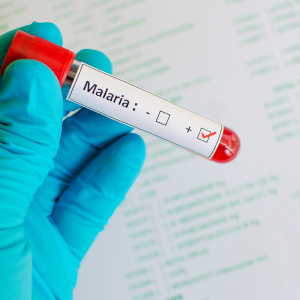
“Ending malaria is a shared goal,” says Maria Melillo. “Our contribution is to ensure that every clinical decision our teams make, in every location where we operate, reflects the best available evidence. That is how we do our part.”
Medilink International operates across malaria-endemic regions of sub-Saharan Africa, managing cases that range from routine presentations to complex emergencies requiring urgent transfer. That operational presence, sustained over decades, is the foundation of the clinical experience our teams bring to every case.
“You learn things about malaria that no textbook can fully prepare you for,” says Dr. Cabanga. “Every case teaches you something. And that accumulated experience is what allows you to make the right call when it matters most.”
Ending malaria is a global ambition. Getting the treatment right, every time, is how we do our part.

