
Ebola Virus Disease: What Organisations Operating in High-Risk Environments Need to Know
Ebola Virus Disease (EVD) remains a documented public health risk in parts of sub-Saharan Africa. Recurrent outbreaks have been reported in countries including the Democratic Republic of Congo, Guinea, and Uganda since 2020.[1] For organisations with personnel deployed in complex, remote, or resource-limited environments, a working understanding of EVD is a core component of responsible occupational health and operational risk management.
Understanding the Disease
EVD is a severe viral haemorrhagic fever with an incubation period ranging from 2 to 21 days.[2] It is caused by viruses of the Ebola genus, of which four species are known to infect humans.[3] The Zaire species is the most prevalent and remains the primary focus of current vaccine and therapeutic development.[3] One of the most important findings worth noting is that individuals are not infectious until symptom onset, which is a critical factor in early identification and containment.[2]
Recognising Warning Signs
The early symptomatic presentation typically includes sudden onset fever, profound fatigue, muscle pain, headache, and sore throat.[4] Current clinical studies indicate that the disease may progress to vomiting, diarrhoea, rash, and in some cases internal or external bleeding.[5] In addition, sudden, severe, and unexplained febrile illness should be treated as a potential warning sign. This is particularly relevant where more than one individual within the same household, facility, or community is affected, and this highlights the importance for suspected cases to be escalated immediately to a qualified healthcare professional.
Transmission and Risk
Clinical studies have further indicated that Ebola is not transmitted through airborne routes, and transmission occurs through direct contact with blood or other body fluids from a symptomatic individual or infected animal.[3] The infection occurs when these fluids enter the body through mucous membranes or broken skin, while indirect transmission may also occur through contact with contaminated materials, including bedding and clothing soiled with infectious fluids.[5] This is a key detail, as the highest-risk environments include caregiving without appropriate personal protective equipment, healthcare settings with insufficient infection prevention and control measures, and funeral practices involving direct physical contact with the deceased.[3]

Prevention
Ebola prevention relies on strict adherence to standard precautions and consistent use of appropriate personal protective equipment, as well as medical preparedness. Rapid identification and isolation of suspected cases is essential to interrupt transmission, while contact tracing should be implemented and maintained over a 21-day monitoring period.[2] In affected regions, it is recommended for individuals to avoid contact with bats, non-human primates, and bushmeat.[5]
Vaccination against Zaire Ebola virus should also be considered where applicable. Ervebo, a single-dose vaccine, has demonstrated efficacy of up to 97.5 percent as assessed through WHO prequalification.[6] An alternative two-dose regimen, Zabdeno and Mvabea, has received regulatory authorisation for use against Zaire ebolavirus; however, the exact level of protection in humans has not yet been fully established, as authorisation was granted under exceptional circumstances on the basis of animal studies and immunological data rather than direct human efficacy trials.[6] There are currently no licensed vaccines for Bundibugyo or Sudan Ebola virus.[6]
Treatment
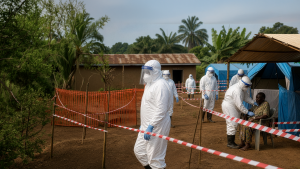
The management of EVD requires immediate isolation of suspected cases, laboratory confirmation, strict infection prevention and control measures, and intensive supportive care.[2] For Zaire Ebola virus, two monoclonal antibody treatments, Inmazeb and Ebanga, were approved by the United States Food and Drug Administration following the 2018 to 2020 outbreak in the Democratic Republic of Congo and have demonstrated improved survival outcomes when administered early.[1] There are currently no approved targeted therapies for Sudan or Bundibugyo Ebola virus,[6] and management in these cases remains supportive and guided by established clinical protocols and applicable research frameworks.
Medilink International’s Position
At Medilink International, we continue to provide medical advisory and operational health support to organisations operating in environments where infectious disease risk forms part of the operational landscape. We recommend that early reporting, structured preparedness, and informed response planning remain critical to reducing risk exposure and improving clinical outcomes.
Download our updated EVD factsheet for a full clinical summary here: Ebola Virus Disease Factsheet
References
[1] World Health Organization Regional Office for Africa. Ebola Disease. Available at: https://www.afro.who.int/health-topics/ebola-disease
[2] World Health Organization. Ebola Disease: Fact Sheet. Available at: https://www.who.int/news-room/fact-sheets/detail/ebola-disease
[3] European Centre for Disease Prevention and Control. Factsheet about Ebola Disease. Available at: https://www.ecdc.europa.eu/en/infectious-disease-topics/ebola-disease/disease-information/factsheet-about-ebola-disease
[4] Ferri FF. Ebola Virus Disease. StatPearls [Internet]. Treasure Island (FL): StatPearls Publishing; Updated March 2024. Available at: https://www.ncbi.nlm.nih.gov/books/NBK560579/
[5] World Health Organization. Ebola Virus Disease: Health Topics. Available at: https://www.who.int/health-topics/ebola
[6] World Health Organization. Ebola Virus Disease Vaccines: Questions and Answers. Available at: https://www.who.int/news-room/questions-and-answers/item/ebola-vaccines

