
Risk Management in Complex Operations: Preparation Before Response
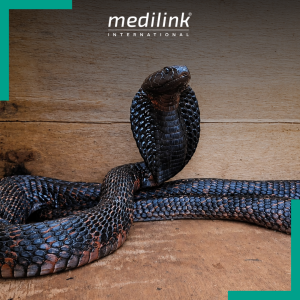
It is a bright morning at a site in one of the countries Medilink International operates in Africa. Personnel move steadily across the operational area, navigating equipment, storage zones, infrastructure, and sections of surrounding vegetation as they carry out the activities that support the day-to-day operations. For those working on site, the environment is familiar, but familiarity does not eliminate risk. Operations in remote locations present a unique combination of occupational and environmental hazards that require careful planning and continuous vigilance.
As one team member lifts a drum to relocate it, a venomous spitting cobra emerges from beneath and strikes.
The encounter is over in seconds. In environments like this one, it is also far from exceptional.
For personnel operating across remote sites in Africa and beyond, the proximity of venomous species is one of many environmental realities that cannot be eliminated, only prepared for. What determines the outcome of an incident like this is rarely the incident itself. It is the state of readiness that preceded it.
At first glance, the cobra appears to be the story. In reality, however, it is not. The real story is the planning, preparation, and risk management framework that ensured personnel knew how to respond, appropriate equipment was available, and the necessary medical measures were already in place.
This distinction lies at the heart of effective operational risk management. Organisations often focus on the incidents that occur, yet the true measure of resilience is found in the work that takes place beforehand. Successful outcomes are rarely the result of chance. More often, they are the result of experience, preparation, and the ability to identify and mitigate risks before they become emergencies.
For more than three decades, Medilink International has supported organisations operating in complex, remote, and hard-to-reach environments across multiple sectors and regions. Throughout that time, one lesson remains consistent: risks rarely appear without warning. While it may not always be possible to predict the exact nature of an incident, it is often possible to identify the conditions that could give rise to one and implement measures that reduce its likelihood and impact.
At Medilink International, our consultancy approach is built around a structured process that transforms risk awareness into practical preparedness. This begins with detailed assessments that identify both immediate and emerging threats. However, identifying risks is only the first step. The findings must then be translated into meaningful actions that can be implemented and sustained throughout the life of an operation.
This often includes the development of Health Management Systems, Health Risk Assessments, Health Impact Assessments, Medical Emergency Response Plans (MERPs), evacuation procedures, communication protocols, and workforce training programmes. The objective is not simply to document potential hazards but to create a framework that enables organisations to manage them effectively.
Continuous evaluation also plays a critical role in maintaining resilience. Monitoring incidents, near misses, training outcomes, and operational performance provides valuable insight into how effectively risk controls are functioning. This information enables organisations to address knowledge gaps, refine procedures, and strengthen preparedness over time. Effective risk management is not a static process, and in our experience, we understand that it evolves alongside the operation, adapting to changing conditions and emerging challenges.
Ultimately, the most effective risk management strategies are not judged by how organisations react when something goes wrong. They are judged by the preparation, planning, and foresight that took place long before the incident occurred. The cobra may have been an immediate threat, but it was never the real risk in this true story. The real risk would have been failing to prepare for the possibility in the first place…
In conlusion, we understand that for personnel working in or travelling through regions where venomous species are present, snakebite response is frequently misunderstood. In our next post, Dr Mary Hoffe, Clinical Governance, Topside Support and Flight Physician at Medilink International, will address some of the most critical do’s and don’ts for anyone who may find themselves in exactly this situation.
Watch this space for practical guidance that could make all the difference when every second counts.

