
Clinical Leadership in Complex Environments – The Role of Female Physicians at Medilink International’s Mozambique Sites
Young. Female. Operating at the frontline of clinical care.
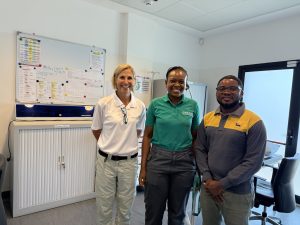
In Pemba, northern Mozambique, two physicians carry the responsibility of maintaining clinical readiness across remote operational sites where access to conventional healthcare infrastructure is limited.
On observance of International Women’s Day, Medilink International recognises the professional contribution of two physicians whose work supports the delivery of healthcare services in one of the organisation’s most operationally complex environments.
Dr Lina Niquice and Dr Mionelia Domingos are based in Pemba, in the Cabo Delgado province of northern Mozambique, where they manage day-to-day clinical operations across two sites: an onshore clinic and an offshore facility. Medilink International currently operates three medical sites in Mozambique, supporting personnel working in remote and industrial environments where clinical readiness, emergency response capability, and operational continuity form part of daily service delivery requirements.
In this context, the role of the on-site physician extends beyond conventional consultation, to include operational oversight and emergency preparedness within geographically remote and logistically complex settings. Working across five-week rotational cycles, Dr Lina Niquice and Dr Mionelia Domingos oversee ambulance and equipment readiness checks, manage medical supply inventories, coordinate medical evacuation procedures, deliver online training programmes, and facilitate in-person first aid and safety training. These functions contribute to maintaining clinical and emergency preparedness across both sites.
“This is demanding work, and that is precisely what makes it meaningful. Every day requires you to be operationally ready, clinically sharp, and prepared for situations that are rarely straightforward. I would not trade that for a more predictable environment.” – Dr Mionelia Domingos
Across the region, the patient population generally includes a significant proportion of women and children, for whom access to a female physician can meaningfully influence clinical engagement. Communication, trust, and the willingness to seek care are shaped by cultural and social dynamics that vary across the communities served. These are not factors confined to any single site or service model, but they form part of the broader context in which clinicians working in this environment must be prepared to operate.
“Practising here means understanding the communities around you, not just the clinical conditions you are treating. That breadth is what I value most about this role. It makes you a better physician.” – Dr Lina Niquice
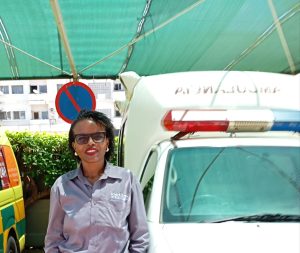
Within Mozambique’s broader healthcare landscape, female physicians practising in frontline roles across technically complex industrial healthcare environments remain relatively uncommon. Dr Lina Niquice and Dr Mionelia Domingos therefore occupy a distinctive professional position, both within Medilink International’s operational structure and within the wider environment in which they practise. Moreover, the presence of female doctors in roles of this scope and responsibility also carries professional significance beyond day-to-day clinical practice.
“In regions where female representation in technical healthcare positions remains limited, the visibility of qualified women working in operational medical roles provides a tangible professional reference point for younger generations with dreams of pursuing similar career paths.”, says Dr Mionelia Domingos
Medilink International’s ability to deliver consistent and operationally sound healthcare services in complex environments depends on the professionalism, clinical discipline, and operational leadership of its teams on the ground. The work of Dr Lina Niquice and Dr Mionelia Domingos in Pemba reflects the standards of clinical readiness and professional competence that underpin Medilink International’s healthcare service model across Africa and other regions where the organisation operates.
“The hardest environments ask the most of you. That is not a warning. For me, it has always been the reason to be here.”, concludes Dr Lina Niquice

