
From Training to Response: Building Clinical Readiness in Angola
Prepared for the Moments That Matter Most
In high-risk and remote environments, emergency response comes down to one essential factor: having the right people, properly trained, ready to act when it matters most.
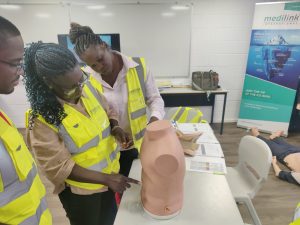
Across Central Africa and particularly in Angola, Medilink International continues to strengthen frontline medical capability through internationally recognised training programmes such as Basic Life Support (BLS), Advanced Cardiovascular Life Support (ACLS), and Prehospital Trauma Life Support (PHTLS). These programmes go beyond theory, focusing on practical decision-making, confidence under pressure, and effective teamwork in real-world conditions.
The First Critical Minutes… and Sometimes Hours
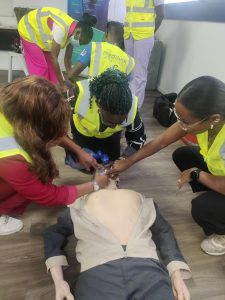
Medical emergencies in remote settings rarely happen in controlled environments. Through BLS and ACLS training, national staff are equipped to quickly recognise life-threatening cardiac conditions such as cardiac arrest, initiate high-quality CPR, and stabilise patients until evacuation or higher-level care is available. The emphasis is simple but critical: act early, act effectively, and act with clarity.
“Training is not about memorising protocols. It’s about being able to act decisively in the first critical minutes,” explains Course Director Dr. Cosmelli. “Those minutes are where outcomes are determined.”
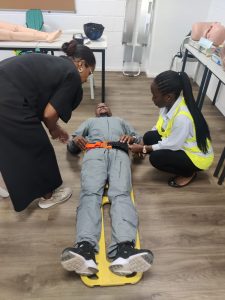
In many of the environments where Medilink operates, there is a significant gap between the point of injury and hospital-level care. PHTLS training is designed specifically to address this challenge.
Participants learn how to assess trauma patients, prioritise care, and manage life-threatening conditions such as severe bleeding, airway compromise, and shock often with limited resources. Just as importantly, they learn how to function as a coordinated team in complex and demanding situations.
“We are preparing teams for real conditions, not ideal ones,” says Dr. Cosmelli. “That means working with constraints, making rapid decisions, and maintaining control in dynamic environments.”
Building local capacity across boarders
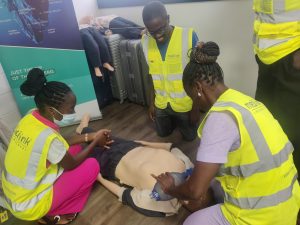
A key focus of Medilink’s training strategy in Angola is long-term sustainability. By investing in national staff, the programme strengthens local capacity and enhances integration with local healthcare systems.
Simulation-based training is at the core of Medilink’s methodology. Participants are placed in realistic emergency scenarios where they must apply clinical knowledge, communicate clearly, and work together under pressure.
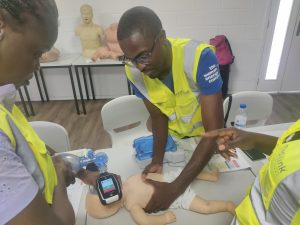
“We create scenarios where teams must think, communicate, and act as one,” notes Dr. Cosmelli. “Because in reality, no one responds alone.”
As Medilink International operations expand into increasingly complex environments, medical preparedness is no longer optional it is a fundamental component of risk management. Training programmes such as BLS, ACLS, and PHTLS represent a strategic investment in workforce safety, operational continuity, and duty of care. More importantly, they ensure that when a critical moment arises, there is always someone ready to respond.
“In every session, the objective is clear,” concludes Dr. Cosmelli. “To make sure that when it matters most, there is someone present, prepared, and capable.”

