
Medical Care Without Borders – The Flight Nurse’s Role in Air Ambulance Missions
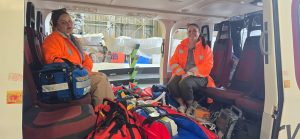
Medical emergencies rarely occur at convenient moments. When a patient requires urgent medical transport across borders or continents, care must continue seamlessly from the ground to the sky. In these moments, flight nurses play a critical role in stabilising patients, monitoring complex conditions, and ensuring continuity of care throughout the journey.
Within aeromedical operations, every mission requires a balance of clinical precision, operational readiness, and adaptability. Delivering care inside an aircraft presents a unique set of constraints that demand structured decision-making, clear communication, and close collaboration between medical and aviation teams.
Delivering Care in a Complex Environment
Unlike traditional clinical settings, aircraft cabins offer limited space, restricted equipment, and continuously changing environmental conditions. Flight nurses must adapt their practice while maintaining the same standards expected in hospital-based care.
Camilla-Maja Jorgensen, Flight Nurse with over three years’ experience in the industry, highlights the importance of preparation and clinical awareness in this environment.
“Providing care in an aircraft requires a different mindset. You are working in a confined space with limited equipment, so every intervention must be planned. You rely heavily on your clinical judgement and preparation,” says Camilla-Maja Jorgensen.
During aeromedical evacuations, patients may present with complex or stabilised conditions that still require continuous monitoring and intervention. The flight nurse is responsible for delivering hands-on care throughout the journey, ensuring that the patient remains stable and supported at all times.
“Our role is to stabilise the patient and maintain that stability during transport. You must anticipate complications before they happen, because access to additional resources is limited once you are in the air,” adds Camilla-Maja Jorgensen.
In practice, this requires constant assessment, medication management, and readiness to respond to any change in the patient’s condition.
A Collaborative Clinical Model
Aeromedical missions operate through a clearly defined clinical structure. The flight doctor leads medical decision-making, while the flight nurse implements treatment plans, monitors the patient, and provides continuous clinical feedback.
“It is a collaborative process. The doctor leads the clinical decisions, and I support by monitoring the patient closely, providing updates, and acting as a second set of clinical eyes. We work together to identify any signs of deterioration early,” explains Camilla-Maja Jorgensen.
In addition to patient care, the flight nurse anticipates clinical needs during procedures, preparing medications and equipment in advance to ensure efficiency and safety. This level of preparation is critical in an environment where time and access are limited.
The clinical model is adapted depending on the patient’s condition. For stabilised patients, transfers may be conducted by a flight nurse independently. Where there is any anticipated clinical risk, a flight doctor is included as part of the team.
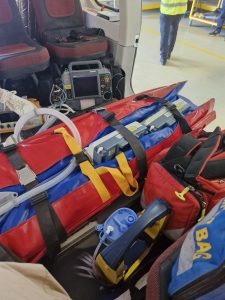
Clinical Readiness Beyond the Mission
The responsibility of a flight nurse extends beyond in-flight care. Operational readiness between missions is essential to ensuring safe and effective responses at all times.
Flight nurses are responsible for preparing and maintaining all medical equipment, medications, and systems used during transport. This includes managing controlled substances, checking equipment functionality, and ensuring that all resources are immediately available for deployment.
“Between missions, my responsibility is to make sure everything is ready. Equipment, medication, documentation. If something is missing or not functioning, it directly impacts our ability to respond. We have to be prepared at all times,” notes Camilla-Maja Jorgensen.
Infection prevention and control is also a critical component of the role. All procedures, equipment handling, and aircraft environments must comply with strict clinical and aviation standards to ensure patient and crew safety.
Clinical Expertise at Altitude
Flight nursing requires a broad and adaptable clinical skillset. Professionals must be prepared to manage a range of medical scenarios, including respiratory conditions, cardiac events, and patients requiring ongoing monitoring during transport.
Environmental factors such as cabin pressure, altitude, and aircraft movement introduce additional complexity, requiring continuous clinical assessment and adjustment.
“The environment is unpredictable, and situations can change quickly. But that is also what makes the role meaningful. You know that your actions directly contribute to the patient’s safety during a critical moment,” says Camilla-Maja Jorgensen.

